
Procell Microchanneling for Hair Restoration

If you've started noticing a widening part, a thinning crown, or a hairline that doesn't look as full as it used to, you're not alone. Hair loss often happens gradually, making it difficult to know when it's time to move beyond shampoos and supplements and consider professional treatment.
Procell microchanneling for hair restoration is an in-office treatment designed to support the scalp environment using precise microchannels and professional growth-factor serums. While it isn't a cure for every type of hair loss, it can be an effective option for people experiencing early to moderate thinning as part of a personalized hair restoration plan.
What is microchanneling for hair restoration?
At its core, Procell Microchanneling is a collagen-induction treatment adapted specifically for the scalp. Using a specialized device, your provider creates thousands of tiny vertical microchannels in targeted areas where hair density has decreased.
These controlled microchannels trigger the body's natural healing response while also allowing professional serums to reach deeper into the scalp than they could through topical application alone. Rather than treating the entire scalp indiscriminately, providers focus on the areas where thinning is occurring most noticeably.
Unlike cosmetic scalp treatments that primarily focus on exfoliation or product absorption, Procell Microchanneling is intended to support healthier conditions around existing hair follicles as part of a long-term hair restoration strategy.
How does Procell Microchanneling work?
Hair grows in cycles. Every follicle moves through periods of active growth, transition, rest, and shedding. Over time, factors like genetics, hormones, stress, aging, or inflammation can disrupt those cycles, causing strands to become finer and less dense.
Procell Microchanneling works by creating controlled stimulation within the scalp. Those microscopic channels activate the skin's natural repair processes while improving the delivery of the professional growth-factor serum used during treatment.
The goal isn't to create overnight regrowth. Instead, treatment focuses on creating a healthier environment that supports existing follicles over time. Because hair grows slowly, visible improvements typically happen gradually over several months rather than after a single appointment.
Procell Microchanneling vs. Traditional Microneedling
The two treatments are often grouped together because both use tiny needles, but there are important differences in technique.
Traditional microneedling is a broad category that includes several devices and application methods. Many use rolling or gliding motions across the skin.
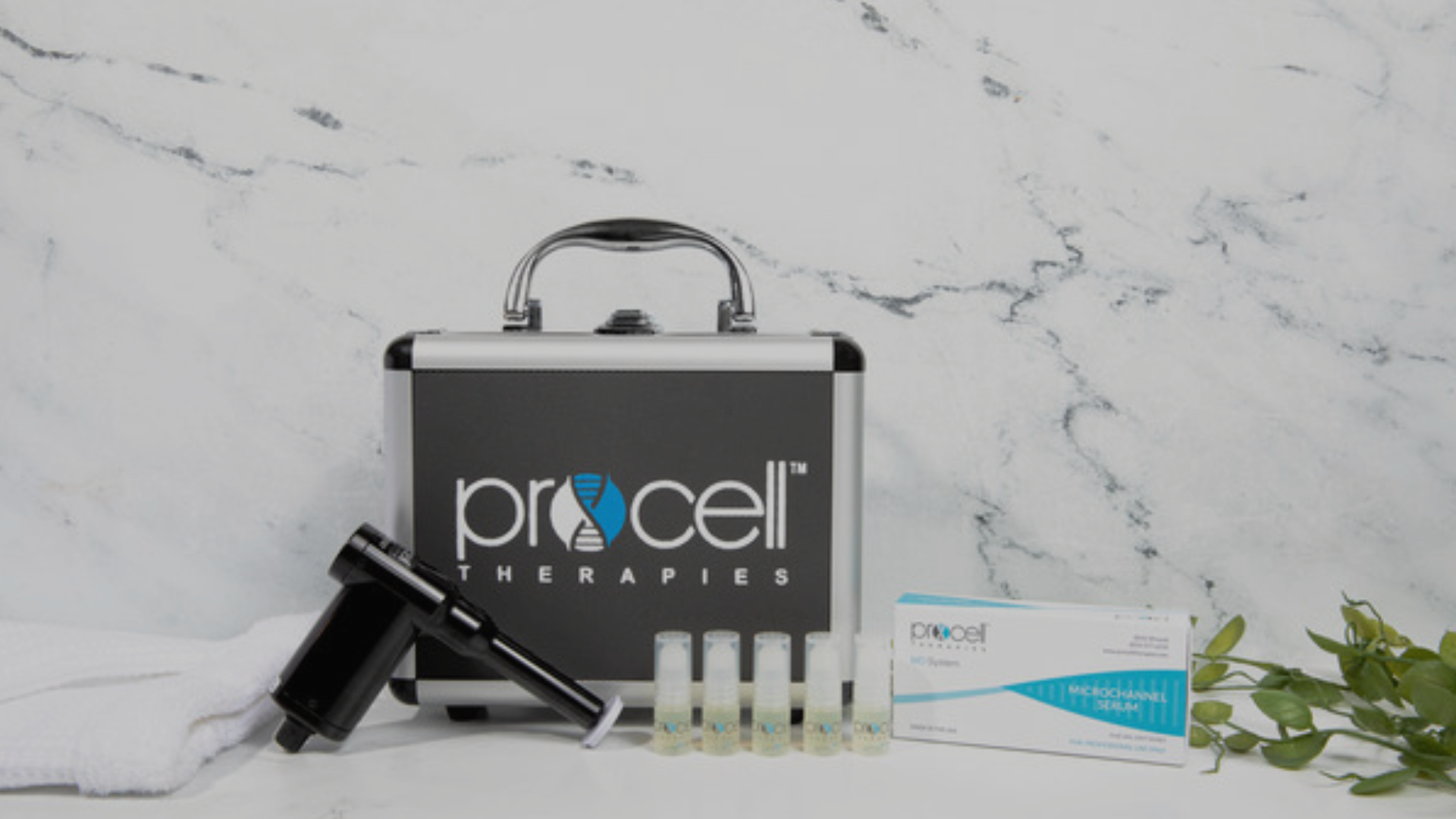
Procell Microchanneling uses a stamping-style device that places extremely fine needles into the skin vertically before immediately withdrawing them. This approach creates uniform microchannels while minimizing unnecessary dragging across the scalp.
For patients, the distinction isn't about one treatment sounding more advanced than another. It's about understanding that different devices create different treatment experiences, which can influence comfort, recovery, and how consistently the scalp is treated.

What happens during a Procell restoration appointment?
Knowing what to expect often makes the decision much easier.
Your appointment typically begins with a consultation, where your provider evaluates your pattern of hair loss, discusses your medical history, and determines whether Procell Microchanneling is appropriate for your goals.
Once treatment begins, the provider methodically treats the areas experiencing thinning with the Procell device before applying the professional growth-factor serum that's designed to complement the treatment.
Most appointments are relatively straightforward, and many patients describe the sensation as mild discomfort rather than significant pain. Your provider can explain exactly what to expect based on your scalp sensitivity.
Recovery & aftercare
One advantage of Procell Microchanneling for Hair Restoration is that downtime is generally minimal.
Your scalp may appear slightly pink or feel tender for a short period after treatment. Most people return to normal daily activities quickly, although providers commonly recommend temporarily avoiding excessive sweating, direct sun exposure, swimming, or harsh hair products while the scalp recovers.
Following your aftercare instructions is an important part of the treatment process, since the scalp has been intentionally stimulated during the session.
Who’s a good candidate for Procell Microchanneling?
The treatment is often recommended for people experiencing gradual thinning rather than complete hair loss.
You may be a good candidate if you've noticed:
A widening part
Reduced density around the crown
Early recession along the hairline
Hair that feels noticeably finer than it once did
However, not every form of hair loss should be treated the same way. Sudden shedding, circular bald patches, scalp infections, or rapid changes should always be evaluated first to determine whether an underlying medical condition is contributing to the problem.
A consultation helps determine whether Procell Microchanneling belongs in your treatment plan, or whether another approach would better address the specific cause of your hair loss.
How many treatments will I need?
Hair restoration is rarely a one-appointment process.
Because hair follicles naturally cycle over time, providers typically recommend a series of treatments spaced several weeks apart. The exact number depends on factors like your pattern of thinning, treatment goals, and how your scalp responds.
Many patients begin noticing changes gradually over several months, with continued improvement as their treatment plan progresses. Setting realistic expectations from the beginning is one of the most important parts of successful hair restoration.
FAQs
-
The goal of treatment is to support healthier scalp conditions and existing hair follicles. Individual results vary, and your provider should discuss what outcomes are realistic based on your type of hair loss.
-
Most patients tolerate treatment well. Some areas of the scalp may be more sensitive than others, but discomfort is generally temporary. Your provider can also explain what the treatment typically feels like before your appointment.
-
Procell treatments are typically paired with a professional growth-factor serum that's applied immediately after microchanneling. Your provider can explain why that serum is used and how it fits into your overall treatment plan.
-
Look for someone who performs a thorough consultation, explains candidacy honestly, outlines realistic timelines, and provides clear aftercare instructions. Hair restoration is a process, and your provider should help you understand exactly what that process looks like before treatment begins.
Getting started.
The best way to know whether this treatment option fits your goals is through a personalized consultation. At Willow, we'll evaluate your pattern of hair loss, discuss realistic expectations, and recommend a treatment plan that's tailored to your scalp and your needs, not a one-size-fits-all solution.
About the Author

Amanda Broadway is the founder of Willow Boutique Day Spa and a licensed esthetician known for her thoughtful, results-driven approach to skincare. She created Willow as a space where effective treatments and genuine care could exist together, offering clients an experience that feels both elevated and deeply personal.
Her philosophy is centered on treating skin with intention: meeting it where it is, choosing the right approach for its current needs, and prioritizing long-term health over quick fixes. Amanda believes the best results come from consistency, professional guidance, and treatments tailored to the individual.
Through Willow Boutique Day Spa, Amanda and her team offer customized facials, advanced skin treatments, and a calming, supportive environment designed to help clients feel confident in their skin and cared for as a whole.
